Facts and figures - Agriculture
Agriculture is a key sector for Close Brothers Asset Finance, with a dedicated team of specialists that help farmers and those involved in the sector secure the assets they need to help them on their path to growth.
In this article we dig a bit deeper to unearth the facts and figures about this crucially important industry…
According to Defra (Department for Environment, Food & Rural Affairs), the total income farming generates in the UK has been rising, long-term, from a touch over £2bn in 2000 to £8bn in 2022, a four-fold increase in just over two decades.
Crops
The value of cereal production increased sharply in 2022 compared to historical levels, to £6.2bn up from £4bn in 2021 and £2.8bn in 2020 (2003: £2.2bn).
One of the drivers of this increase has been wheat, with the value of production hitting record levels (£4.1bn) in 2022. The previous year was also a strong year, but pales in comparison at £2.7bn (2003: £1.44bn).
Oats production more than doubled in value to £310m in 2022 – in 2021 it hit £148m, itself twice the figure of 2003 (£71m).
While the production of oil rapeseed has increased over the past few years (2022: £877m), it is still well short of the levels reached in 2011 (£1.1bn) and 2012 (£986m)
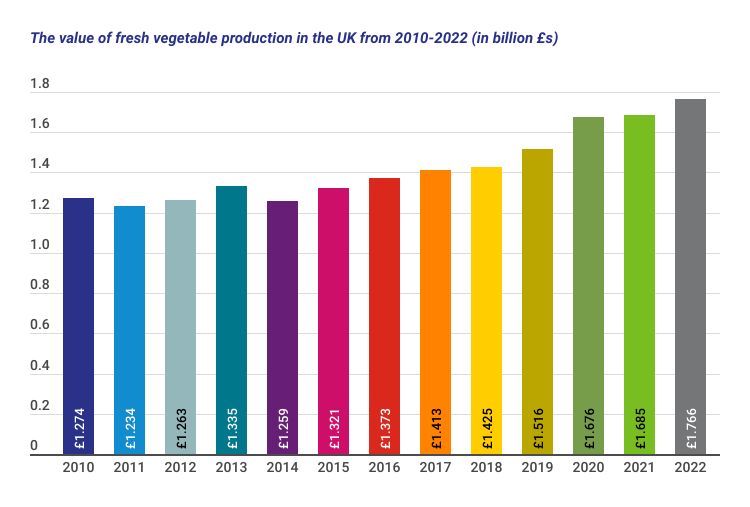
Since 2010, the value of fresh vegetable production has gradually increased:
As in the case of oil rapeseed, the value of plants and flowers has also increased gradually, hitting £1.54 bn in 2022, more or less doubling in value since 2003’s £764m.
Sugar beet, on the other hand, has fluctuated significantly with no noticeable or obvious trend emerging. In 2022, the value of the crop’s production was worth £223m; in 2016 £150m and in 2014 £315m.
Potatoes, a staple of many diets across the UK, has had fluctuating fortunes with 2022 representing the third successive year in the decline in value of potato production:
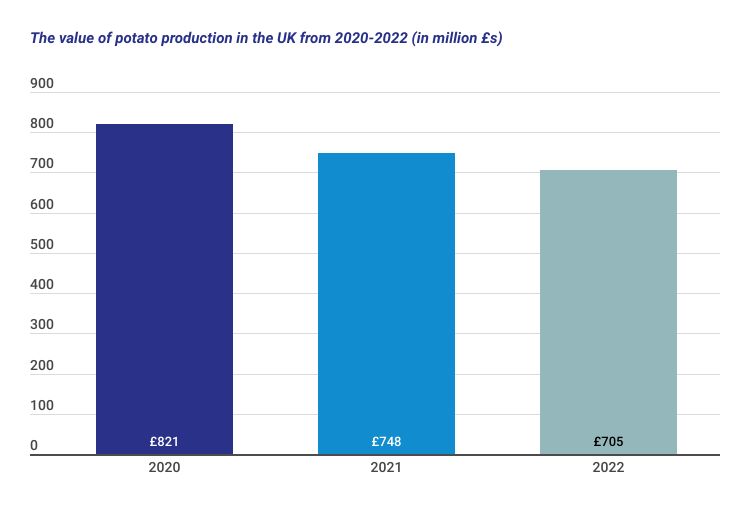
2013 was a high point for potato farmers with value touching close to £1bn (£965m).
Livestock
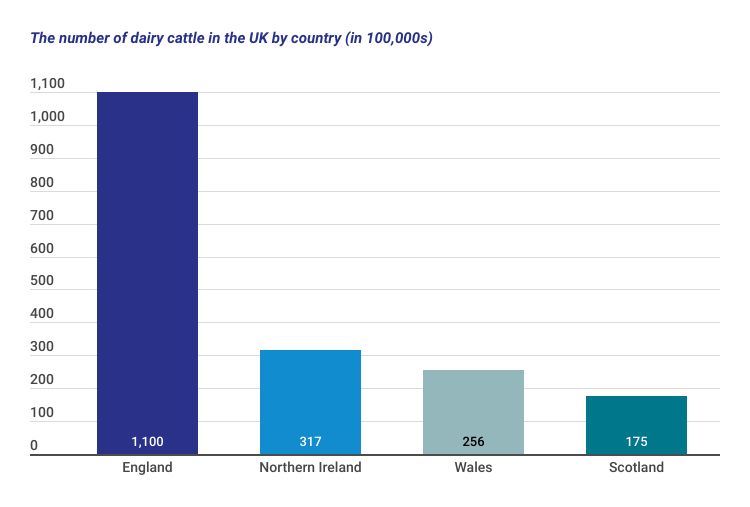
There are around 1.85m dairy cattle in the UK, a figure that’s remained stable since 2010. The vast bulk of those found in England:
The number of cattle and calves on farms has been steadily declining, from a high of 10.57m in 2005 to 9.44m in 2022, while pigs, on the other hand, have risen slightly from 4.86m in 2005 to 5.19 in 2022.
Sheep numbers have remained very steady with 22.36m found in the UK in 2022.
Machinery
2021 and 2022 were record years for the sale of agricultural and forestry machinery with both years seeing sales of £2.2bn. By way of contrast, the figure for 2010 was £1.27bn.
Land use
The total area of land that is suitable for agricultural use in the UK has remained stable for some time - in 2022, approximately 18 million hectares (45 million acres) of land was considered to be agricultural.
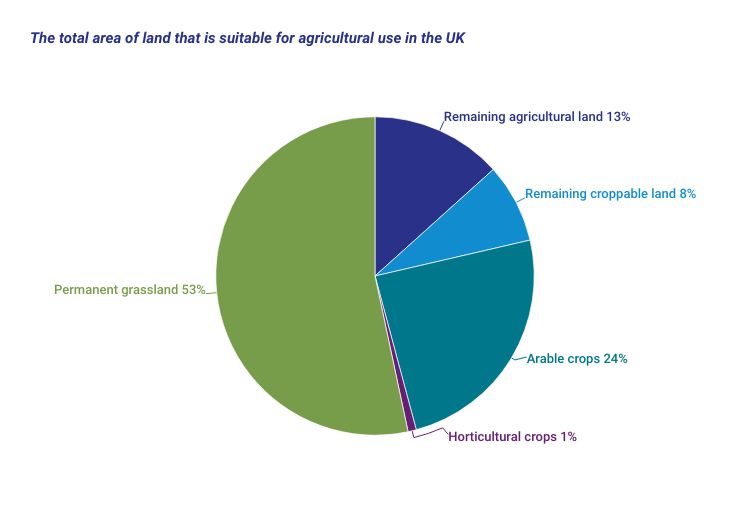
The amount of land deemed as ‘croppable’ has also remained stable at around six million hectares (15 million acres) since 2003. Of this, over 4.5 million hectares (11.1 million acres) was actually utilised for the growing of crops, divided into:
· 4.4 million hectares (10.8 million acres) for arable crops
· 152,000 hectares (376,00 acres) for horticultural crops
Permanent grassland fell to its lowest coverage since 2003 at 9.6 million hectares (23.7 million acres).
Methodology
All data taken from a Statista report titled ‘Agriculture industry in the United Kingdom’