Facts & figures - Commercial vehicle sector
At Close Brothers Asset Finance we have long financed both LGVs (Large Goods Vehicle) and HGVs (Heavy Goods Vehicle), helping transporters and hauliers on a journey to ever more efficiency and a cleaner future.

In this piece we take a closer look at the sector in the UK, including ‘new energy’ commercial vehicles…
Overview
Commercial vehicle sales in the UK – predictably - declined in 2020, registrations rose to 396,000 in 2021—over 100k more than 2020 and the highest since 2016.
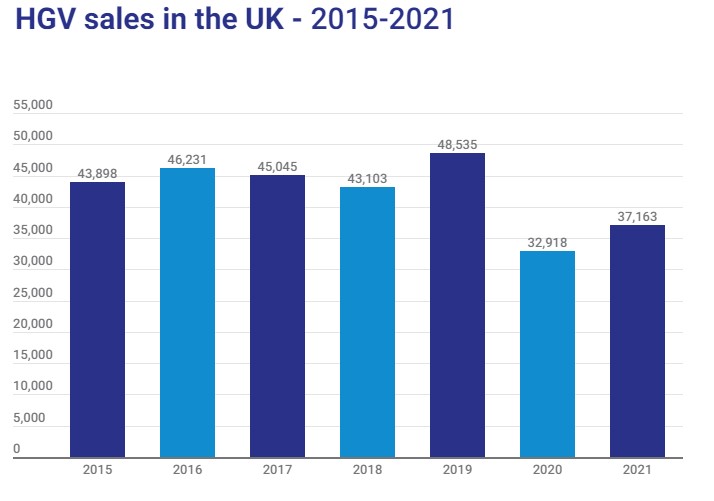
HGV sales in 2021 saw a recovery, of sorts, over 2020, but it was still well down on previous years.
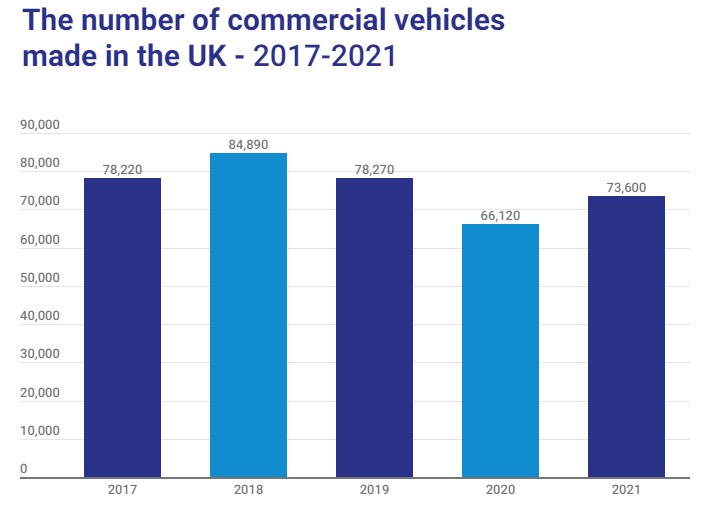
Looking at production, 2021 saw the second fewest number of commercial vehicles made in the UK (73.6k) since 2017; the five-year list:
Stellantis (merger between Fiat Chrysler and the PSA Group), is the leading commercial vehicle producer in the UK; they also own Vauxhall and have a commercial vehicle plant in Luton. Their 2021 numbers (55k) have recovered after a dip in 2020, a pattern repeated across all major manufacturers. The second largest manufacturer is Leyland Trucks, who recorded figures of 18k for 2021.
There has been a steady increase in the number of LGVs registered in the UK since 2005, when there were a touch under three million; today, the figure stands at around 4.4m. HGV registrations have remained exceptionally steady with almost no difference between 2005 and 2021, and very little fluctuation in-between.
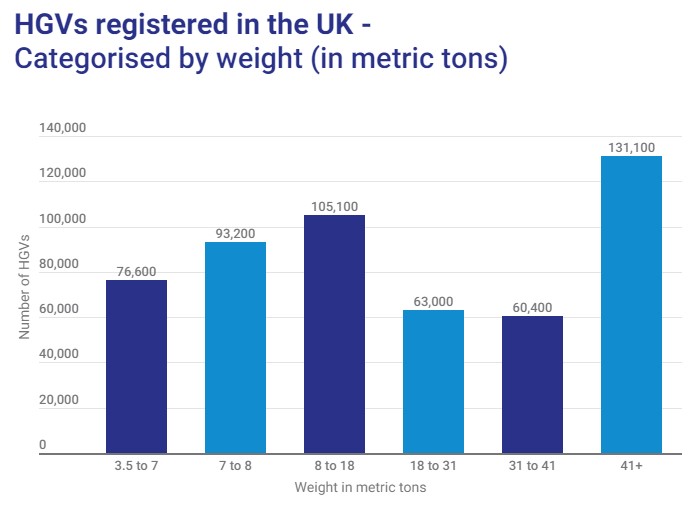
Of the more than 510k HGVs registered in the UK in 2021, almost a quarter (131.1k) weighed over 41 metric tons, the leading weight class for HGVs since 2017. The full list for 2021 (in thousands):
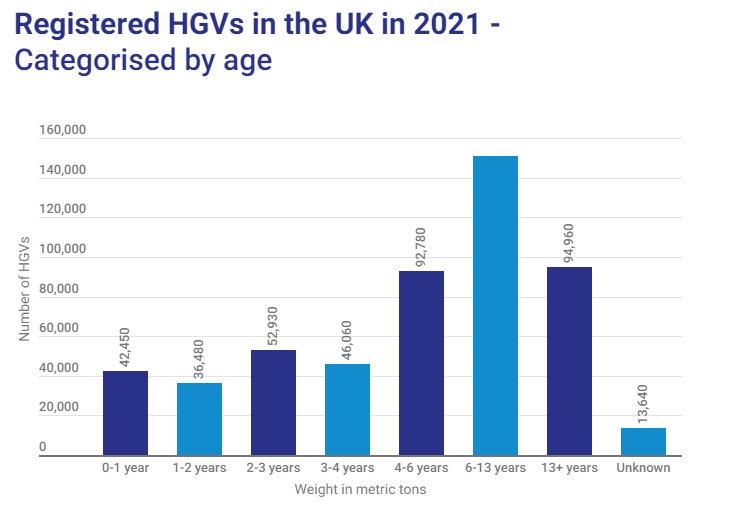
Over 150k of HGVs on the roads in 2021 were between 6 – 13 years old while a further 95k were over 13 years old.
Drivers
There were 275k HGV drivers employed in the UK between April 2020 and March 2021, with half aged 50 or over, meaning a large number will be reaching retirement age in the next five to 10 years.
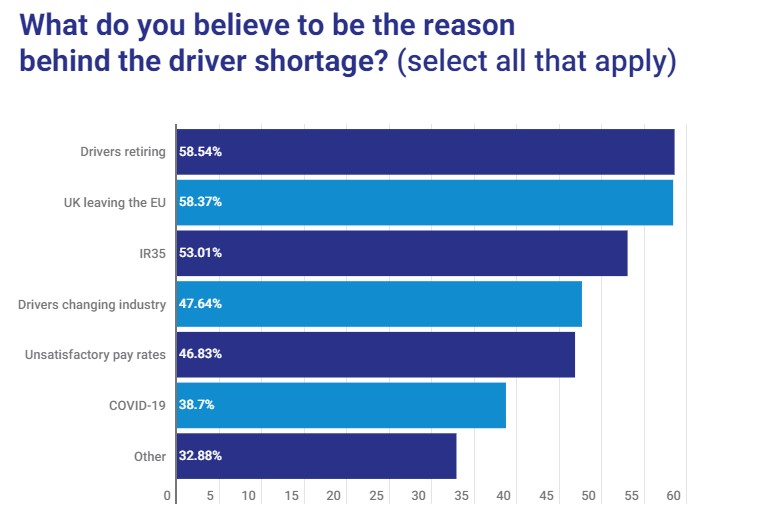
In a survey run by the Road Haulage Association (RHA), drivers retiring and Brexit were named as the two biggest factors behind the driver shortage.
The home nations
As expected, the country that saw the largest number of HGVs registered for the first time in 2021 was England (40k units), followed by Scotland (3.5k units), Wales (1.46k units) and Northern Ireland (1.05k units).
This equated to a market share of 82.2% for England and 6.9% for Scotland; Wales and Northern had less than 5% of the market each.
Low emissions vehicles
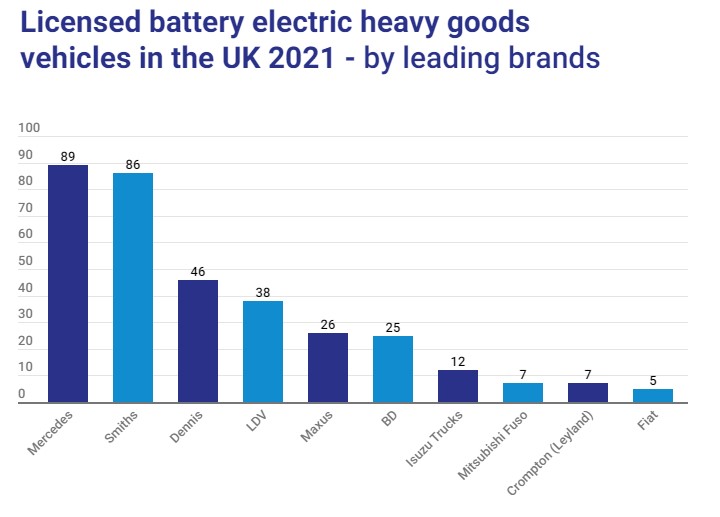
In 2021, there were 14,343 ultra-low emission goods vehicles licensed in the UK (14, 201 LGVs and 141 HGVs). While the numbers are relatively small, they are significantly up from previous years as more options become commercially available.
By Q4 2021, there was only one ultra-low emission HGV registered in Northern Ireland – compared to the 451 in England. Wales and Scotland recorded 21 and 20, respectively.
Diesel dominated the market of medium and heavy commercial vehicles in 2020 with a 98.6% share; petrol accounted for 1% and hybrid electric for 0.2%.
*Sources available on request